Business Security Cameras and Access Control: What to Plan First
Good security design starts before hardware is mounted. Coverage, access rules, retention, and connectivity all shape whether the system works when you need it.
By Silver Star Telecom
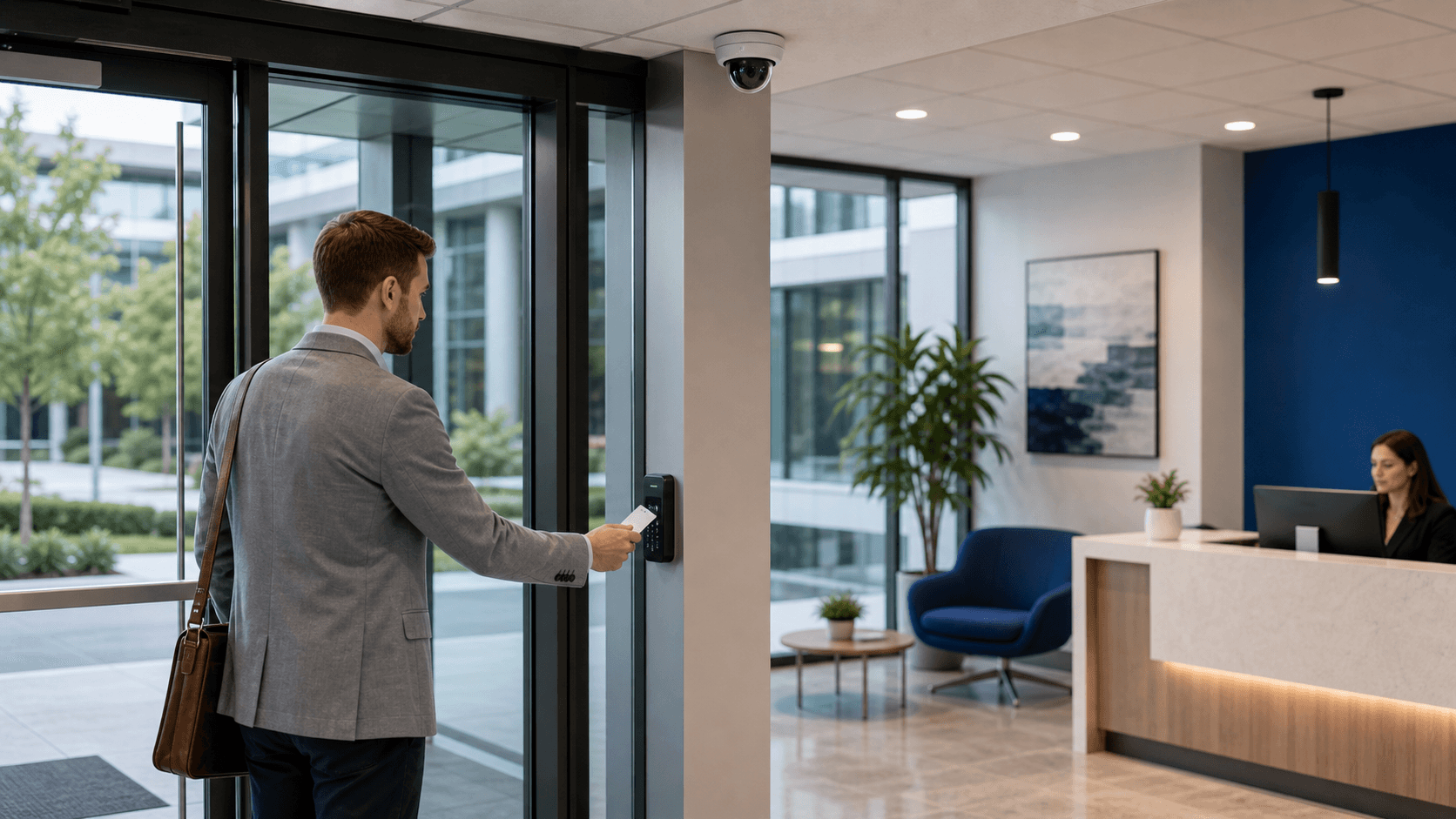
Buying cameras and card readers is the easy part. The harder and more important work is deciding what the system needs to prove, protect, and simplify for the people running the business.
Start with coverage. Entrances, reception areas, loading zones, parking areas, restricted rooms, and cash or inventory locations may all need different camera angles and retention requirements. A camera mounted in the wrong spot can miss the moment you installed it to capture.
Access control needs the same planning. Who should enter which doors, during what hours, and how quickly can access be changed when an employee, vendor, or tenant relationship changes? Those rules should be clear before hardware is installed.
Connectivity is often the piece that gets overlooked. Cameras, recorders, controllers, and remote viewing all rely on the network. If the connection is unstable or the cabling is messy, security tools become harder to trust and harder to support.
A well-planned system brings physical security and network design together: clean cabling, reliable connectivity, useful coverage, and access policies that match how the facility actually operates.